As summer morphs into fall and the warmth of the sun is tempered by crisper air there are still plenty of flowers to brighten our gardens and some of them are positive pollinator magnets. Whether annual or perennial, herbaceous or shrubby these plants provide a bounty of nectar and pollen for late season pollinators.
Cockscomb (Celosia argentea) is a fall favorite where annuals are concerned. Coming into bloom in the latter part of summer it is a bold splash of long-lasting color in shades of yellow, orange, pink and red. The flower spikes come in a variety of shapes ranging from forms that resemble brains or coral, rooster combs (hence its common name) through to feathery plumes or tufts like ears of wheat. Foliage can be green, chartreuse or coppery purple, all of which sets off the flowers nicely. Plants range in height from 12” all the way to 40” although the taller varieties are better suited to borders rather than containers.
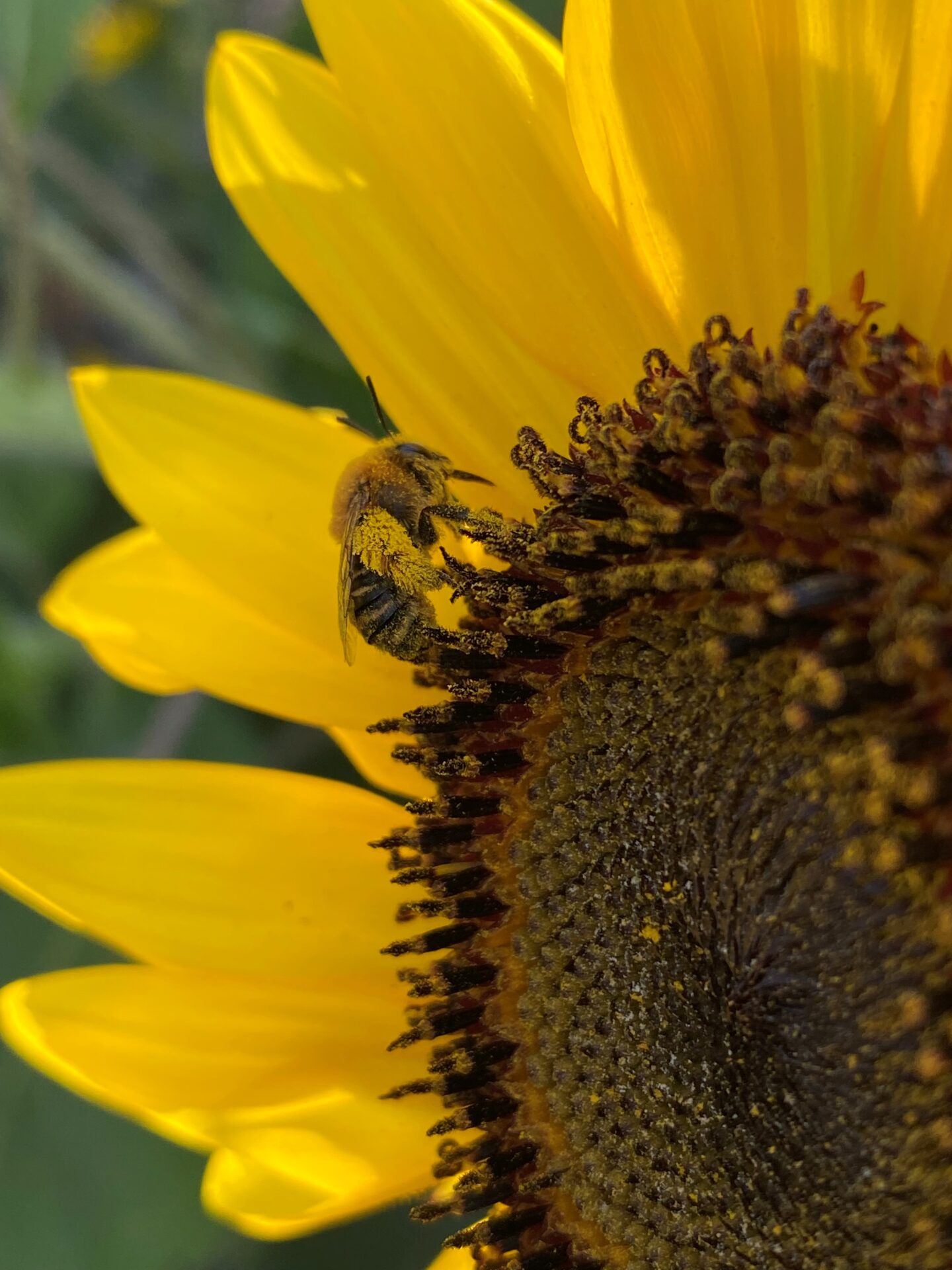
Annual sunflowers (Helianthus annus) are cultivars of a plant native to the North American plains and have been cultivated for centuries for their edible seeds while the value of their ornamental flowers is a comparatively recent occurrence. Whether tall plants with large terminal flowers or compact plants with multiple flowering stems, sunflowers herald fall with their yellow, orange or deep red flowers. As members of the daisy family, they have composite flowers in that the middle is made up of many disk florets, which once pollinated will develop seed, while the yellow petals are ray florets, sterile flowers with a large petal which serves to attract pollinators to the smaller disk florets that offer pollen and nectar. Certain cultivars such as the compact branching forms and those grown for floristry tend to have sterile flowers as sunflower pollen stains as badly as that from lilies!
Asters (Symphyotrichum and Eurybia spp.) are another native daisy that bloom from late summer through the fall. Coming in shades of blue, purple and lavender as well as white, New England is home to several species of perennial asters. They are versatile plants with some species such as New England aster (Symphyotrichum novae-angliae) growing in full sun while others such as white wood aster (Eurybia divaricata) prefer shadier conditions. Many cultivars have been bred from both the New England and New York asters, and it is these that can be found in compact form along with the fall mums, ready for containers and window boxes. For garden specimens which are often taller, take a look at the offerings in the perennial plants areas.
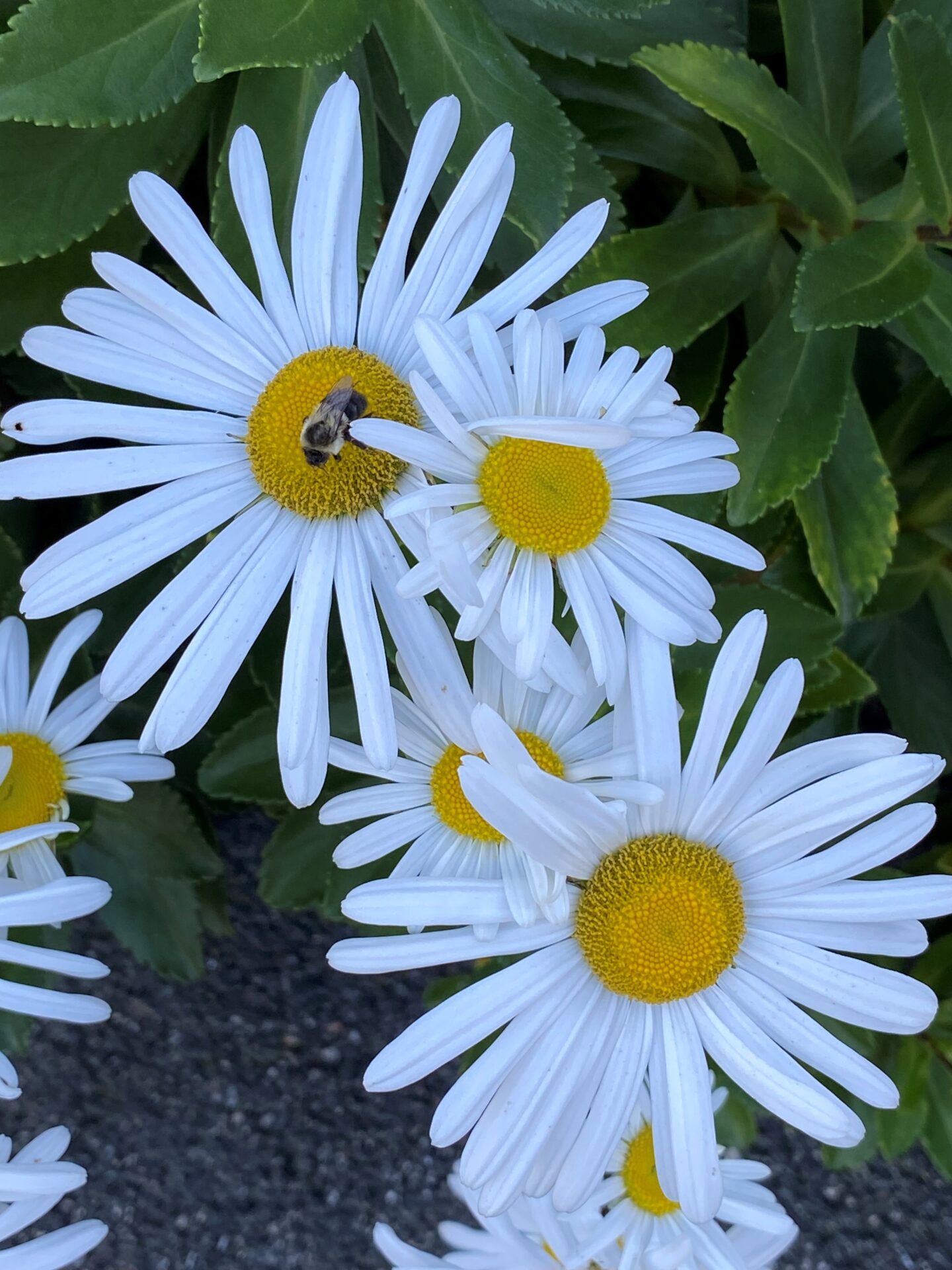
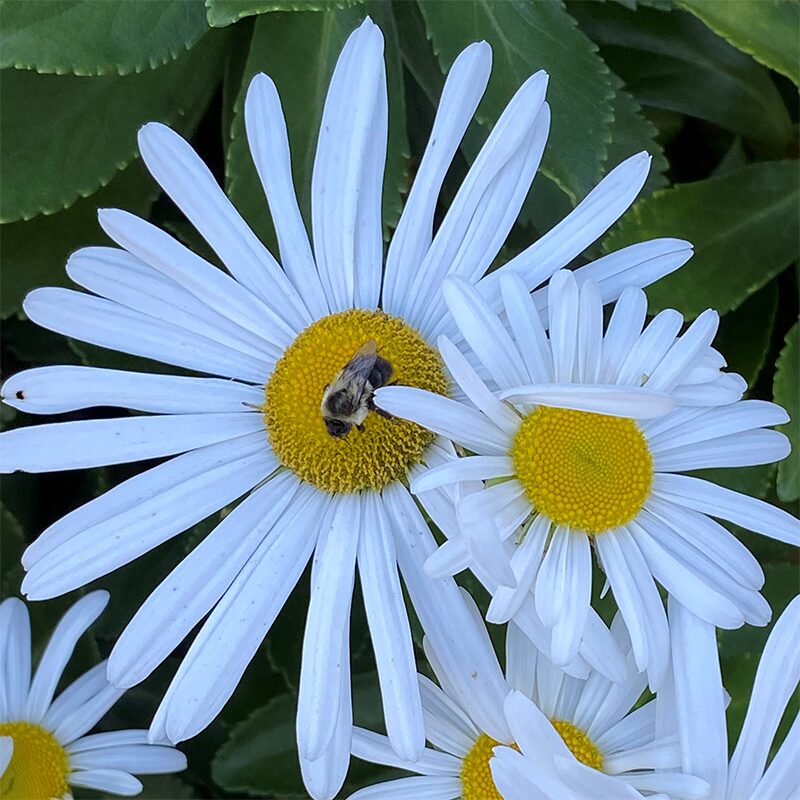
Montauk daisy (Nipponatheum nipponicum) is one of the latest blooming plants in New England, being often at its best in early October. This makes it perfect for the last of the pollinators and both butterflies and bees can be found taking advantage of the pollen and nectar it offers. It is more of a sub-shrub as its stems do not die completely back to the ground over winter. Therefore, to keep this plant neat and mounded it should be pruned back by half once new growth starts to emerge in spring and that way it will ultimately mature to a dense mounding plant 2’ tall by up to 3’ wide.
Goldenrod (Solidago spp.) is another great native plant for pollinators, and despite its initial visual difference to the daisy-like flowers above is also a member of the Asteraceae family. With 20 species native to New England, there are species adapted to sun or shade, dry or moist conditions. They don’t all bloom at once, the earliest starting mid-summer and the later ones in September. They are instantly recognizable by their yellow flowers, although the exception that proves the rule is while golden rod (S. bicolor).
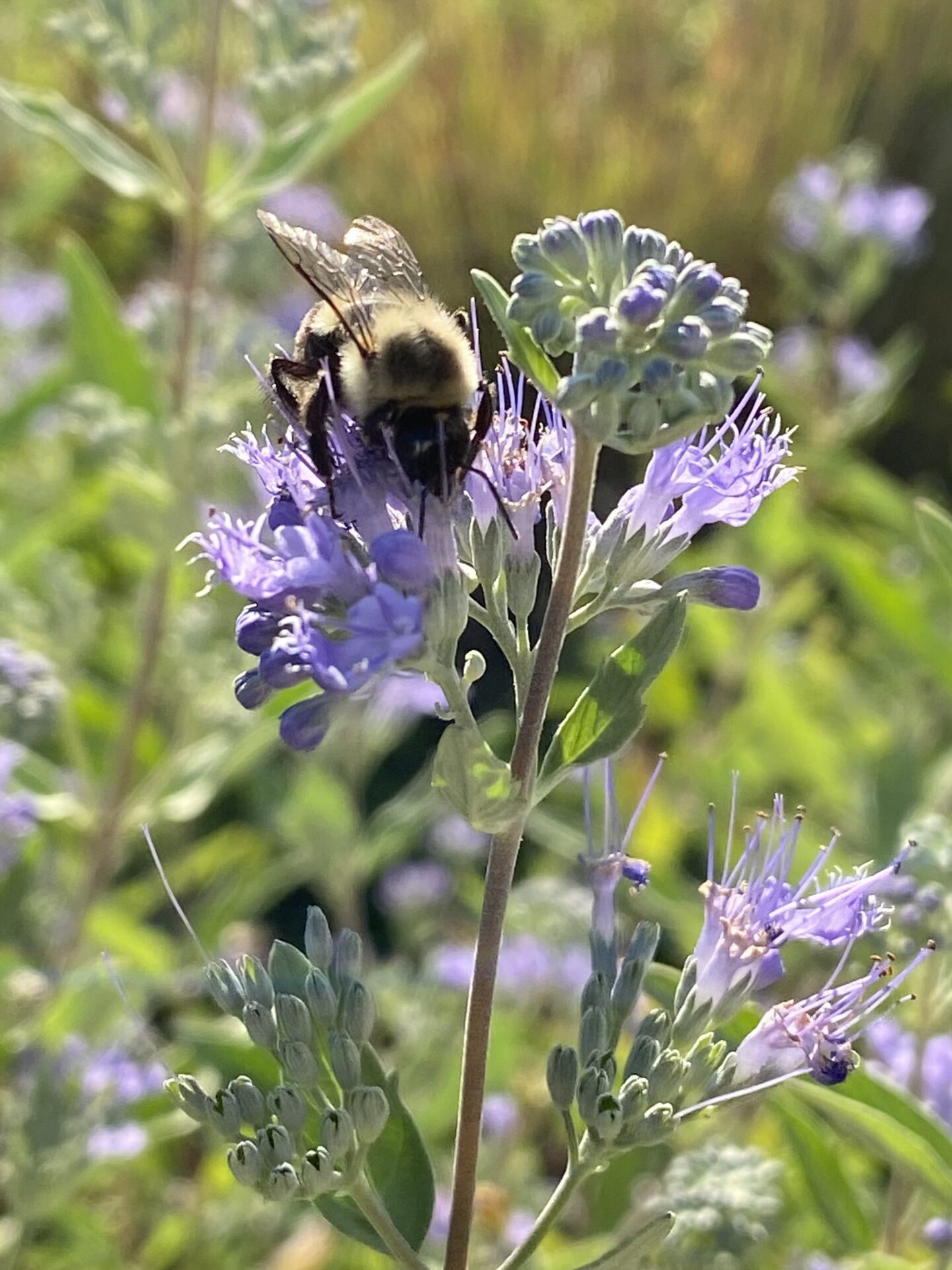
Bluebeard (Caryopteris spp.) is a small drought tolerant shrub suitable for sunny conditions. As its common name suggests, its flowers come in varying shades of blue and lavender, although breeders have now developed a couple of compact, pink-flowered hybrids. Not only does this shrub offer food for pollinators but it also has attractive aromatic foliage which means it is one of those plants that deer and rabbits leave alone. It can behave similarly to buddleia in that winter cold can cause some branch die-back, however removing the dead wood in spring will ensure that by the time it blooms again you will never know it had suffered any adverse effects.
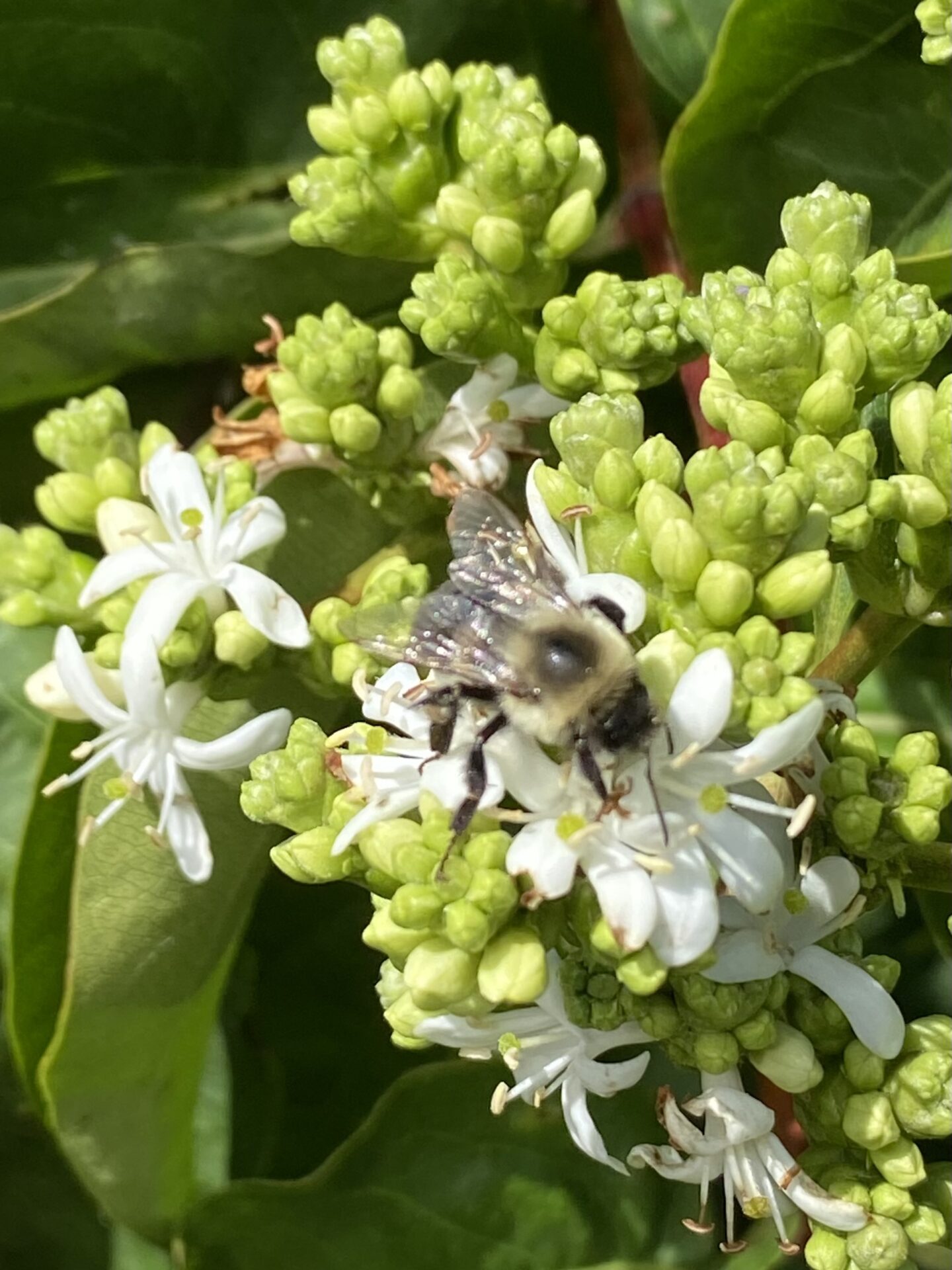
Seven Son Flower (Heptacodium miconioides) is a large multi-stemmed shrub or small tree native to China. The small, white, highly scented flowers appear in clusters of seven – hence its common name. Once the flower petals fall the rosy-pink sepals remain, giving the appearance of a second round of different colored flowers. It blooms in September unlike most other trees and shrubs, and it also offers winter interest with its vertically peeling bark.
There are other fall-blooming plants that offer food to pollinators, but the ones listed above are particularly attractive to those insects looking to successfully finish their life cycles or are preparing to overwinter, and regardless of whether you are looking to help pollinators, these plants are all garden-worthy for a variety of applications.
Sources:
https://grownativemass.org/Great-Resources/gems-e-news/Give-a-Nod-to-Goldenrod