Have you ever wondered how the pros keep up with watering their gardens in the summertime? Between high temperatures, scorching sun, and local water bans, it can be hard to navigate the best way to ensure your plants survive until fall. Read on to see how to not only care for your new spring plants, but your established plants as well.
Signs Your Plant is Suffering from Heat Stress
Just like the way our bodies naturally sweat on a hot day, plants have techniques they have adapted over time to deal with heat stress. Here are a few of the most common symptoms of heat stress or drought in home gardens:
- Wilting – Wilting is sometimes referred to as “flagging”. This happens when there is a lack of water being taken up from a plant’s roots. Leaves and shoots rely on turgor pressure (the water pressure inside plant cells) to stand up straight, but when water is lacking, the top of the plant will flop over.
- Sunscald – This symptom is like a sunburn for plants. Sunscald in the summer can show up on fruits or leaves, and will be visible on the side that is exposed to extreme sunlight. This can look like bleached or blistered plant tissue. Leaves with sunscald are often tender leaves or new growth, and can be pruned off. The side of a ripening fruit with sunscald will not recover, so the fruit can be composted.
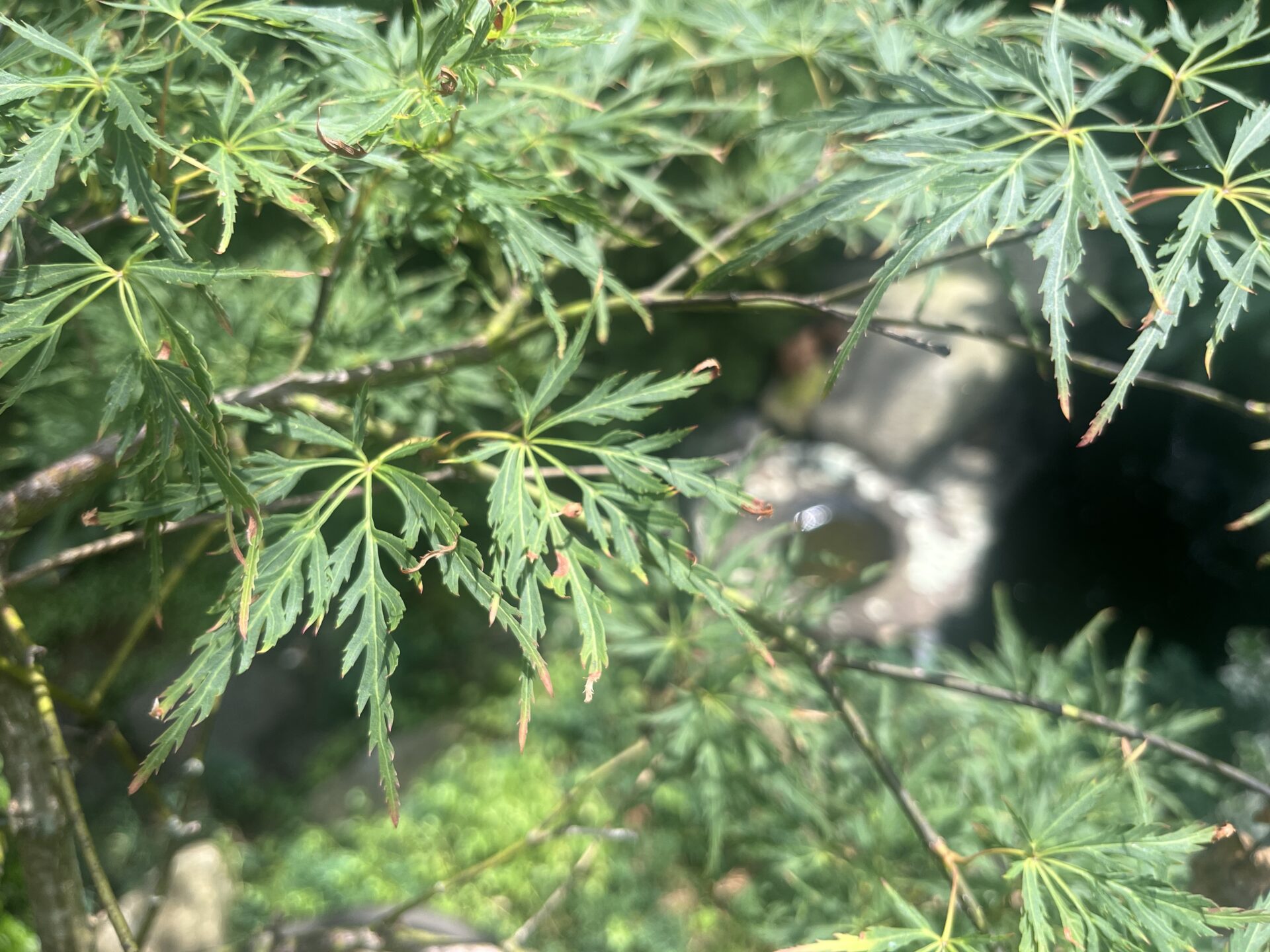
- Dry Leaf Tips – Plants will often show signs of dehydration by having dry, burned leaf tips and edges. High temperatures and lack of water make it hard for a plant to get water to all the outer cells in a leaf, but the plant will attempt to preserve the function of the leaf by keeping the main portion of the alive and photosynthesizing.
- Bolting – Homeowners often notice this on their herbs and lettuces when we experience a spring heatwave. Bolting is when a plant prematurely flowers due to stress or heat. You can attempt to dissuade an herb or lettuce from bolting by pruning off any flowers you see forming, and this may encourage it to put energy into growing edible leaves for a short time.
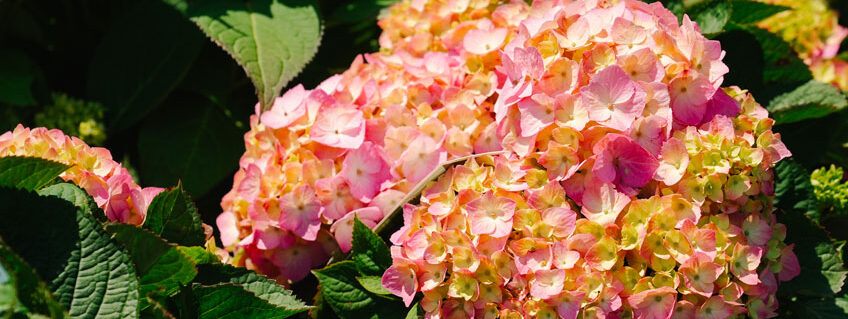
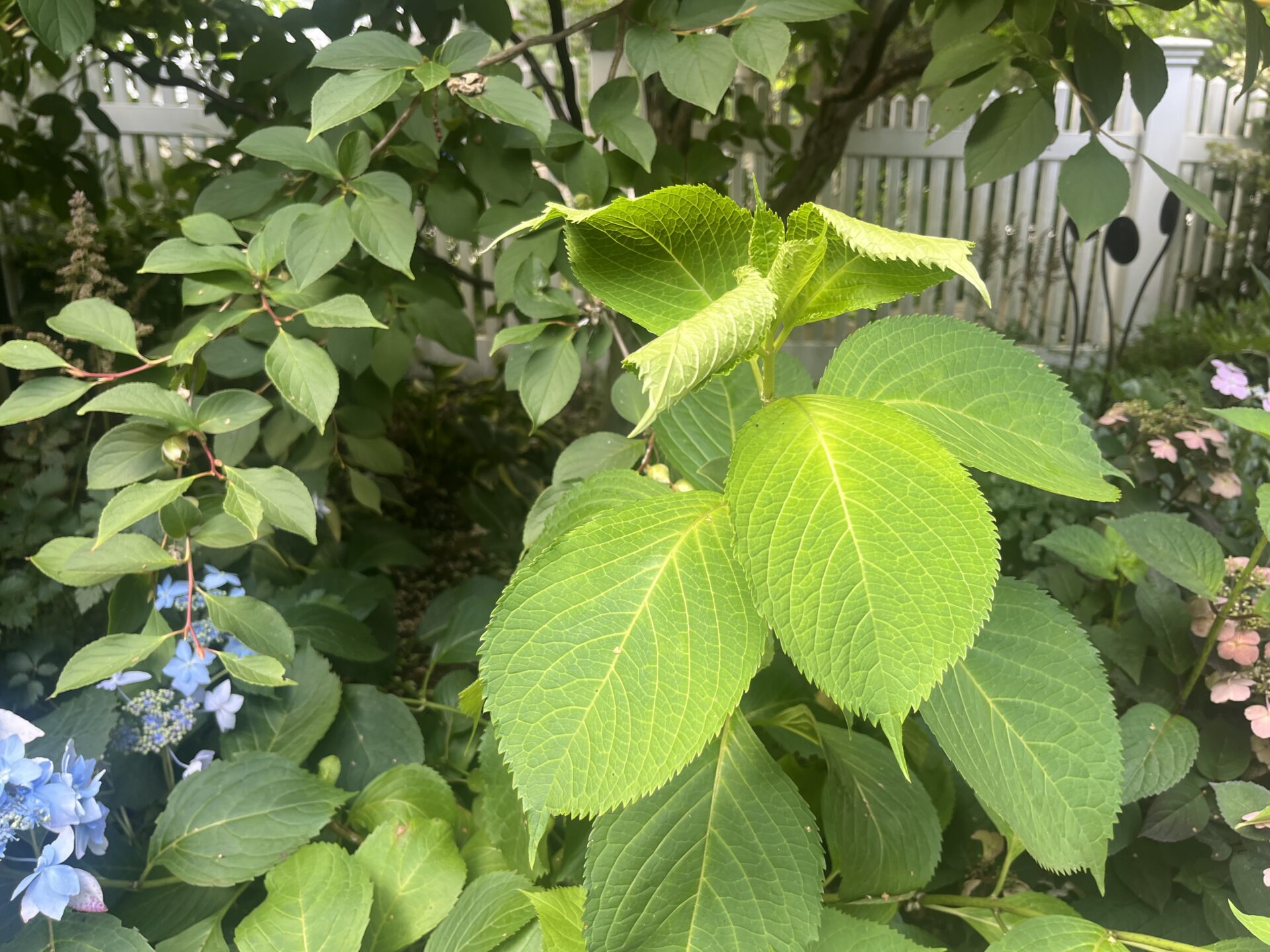
- Leaf curl – Plants that are losing water too quickly may curl their leaves as an adaptation to heat stress. This technique reduces the surface area of the leaf exposed to the air, resulting in the stomata (plant pores) losing less water from transpiration. This is a sign the plant needs water, and is often seen on Hydrangea macrophylla varieties mid-summer.
While many plants can tolerate seasonal stressors in New England, a plant that is repeatedly showing symptoms of heat stress without intervention may not survive. You may see it drop its leaves completely, and in extreme cases, may suffer from dieback or not survive the summer at all.
New Plant Care in the Summer
Our New Plant Watering Guidelines provides instructions on watering plants within their first growing cycle. It is important to remember that new plants within that first year are still getting established, and therefore should be prioritized over established/healthy trees and shrubs if your water supply is limited. This is because those new plants don’t yet have an extensive root system to access water and compete with other neighboring plants. Their new roots will benefit from supplemental water, otherwise they’re more likely to show signs of heat stress and drought than established plants.
Established Plant Care in the Summer
Established plants are those that have been healthy and thriving in your garden for longer than a year. These are less likely to show signs of heat stress, but still may struggle in extreme drought conditions. If you notice that one of these plants is having trouble in the summer heat, you will want to get it on a regular watering schedule. But be sure not to overdo it! They should benefit from weekly watering and pruning off any dead or dying branches. Check to be sure that this plant is in the right place for the conditions it loves, just because it got established initially doesn’t mean there isn’t a better spot for it in your garden.
Efficient Watering
A great way to make the most of summer watering is to use efficient irrigation practices. Whether you have a busy travel schedule and don’t have time to be home watering, or are in an area with an active water ban, efficient irrigation will ensure more water gets to your plant’s roots.
Traditional home irrigation systems often have sprinkler heads, and therefore may have a high portion of water lost to evaporation. If you are using one of these systems, you can make a few changes to reduce the amount of water lost:
- Adjust your schedule so sprinklers are on in the early morning or later in the evening. When sprinklers are running in full sun at the hottest time of day, more water evaporates.
- Make sure the footprint of your sprinklers is covering the lawn and/or garden bed that you want to water. The water landing on a sidewalk or driveway is evaporating and running into sewers, rather than into your root zone.
The most efficient way to water trees, shrubs and perennials is to get water directly to your soil. Use irrigation practices that maximize the water that gets to your root zone, and minimizes water lost to evaporation. Read along for some helpful tools and techniques to implement during summer.
How to Navigate Local Water Bans
Many New Englanders find themselves living in a town with an active water ban during summer months. Click here to view Massachusetts water bans and restrictions in your area. If you don’t have access to a private water source, you may be restricted to watering on certain days, during certain hours, or not be allowed to water at all until the ban is lifted.
In the midst of a ban, it may feel like you can’t keep your garden alive during summer months. But that is NOT the case! Here are some handy tools and techniques to use to make the most of your water supply:
- Rain Barrels – One great tool is to invest in (or DIY!) is a rain barrel. These are containers that collect rainwater, often from a drain spout, and can store water for you to use in your garden. The lower section of a barrel has a spigot for you to fill your watering can or attach a hose. Tap into the supply in your rain barrel on days when you can’t use town water.
- Water Rings and Bags – A great way to keep a new tree watered while you’re on vacation (AND to make the most of days when you CAN water during a restriction) is to use a slow-release tool. Watering rings and bags wrap around a tree trunk, and when filled up, will slowly drip water over a root zone. Keep in mind that these should not be used as a substitute for following our New Plant Watering Guideline, but are a great tool to use so you can enjoy your vacation (or making the most of every day during a water restriction) knowing your new tree will have a water supply!
- Soaker Hoses/Drip Irrigation – These types of irrigation systems are more efficient than traditional sprinklers, because the majority of the water goes to your roots, rather than being lost to evaporation. You can implement this type of irrigation over your vegetable bed, ornamental gardens and even around the trunks of trees. Take your efficiency to the next level using a timer or smart controller!
- Watering Spikes – A tool we love for potted plants is a watering spike. Watering spikes are cone shaped, with the pointed side made out of a porous material like terra cotta. Turn your spike upside down, stick it into your potted plant and fill with water for a passive water source. As the soil dries out, water will be drawn out of the spike through the pores. Some watering spikes allow you to attach water bottles or jugs, which will last longer than just filling the spike itself.
- Moisture Meters – A moisture meter is a tool that lets you know how wet your soils are. These are a great investment for homeowners with raised beds or potted plants, because they’ll tell you whether or not you need to water. Beginner gardeners who aren’t able to gauge a plant’s needs visually especially benefit from having a moisture meter! You may find that you can skip a day watering, because your soil was wetter in the root zone than it appeared.
- Soil Moisture Retention – Products like Hydretain are additives you can mix with your soil to improve water retention and minimize the need for watering. These products range from wetting agents that reduce the surface tension of water in your soil, to humectants that attach to root hairs and enable plants to take up more moisture. These are oftentimes not for use in edible gardens.
- Mulch – A layer of mulch can help manage the moisture levels in your soil. Mulch creates a physical barrier above your plant’s rootzone, and most garden beds benefit from mulch every 1-2 years. Soils that don’t have mulch (or a natural leaf litter layer replenished every year) are exposed to sun and wind which increase evaporation, meaning you are watering more frequently.
Right Plant, Right Place
Plants that haven’t evolved to survive in your area are always going to require more work to keep them happy. For example- if you plant a shrub that likes wet conditions in a hot, dry area, you will likely always need to supplement water in the summer to keep it alive. If instead you choose a plant that thrives in hot, dry conditions, you will have a thriving summer garden without the extra chore of watering. Native plants and nativars have evolved to survive in a certain climate, so not only are they hardy to your zone, but they tend to be more resilient to weather fluctuations. The best way to choose the right plant for your garden bed is to use our Plan Your Project tool.